Luxury Desert Villa Destinations USA: High-End Regional Guide
The American West contains some of the most ecologically diverse and geographically striking arid landscapes in the world. From the sprawling alluvial fans of the Sonoran Desert to the high-altitude sandstone plateaus of the Colorado Plateau, desert environments offer extraordinary architectural canvases. High-net-worth travelers and real estate buyers increasingly seek private residential compounds within these regions. These properties combine extreme spatial isolation with sophisticated building engineering and high-end residential amenities.
However, developing and leasing luxury residential real estate within arid ecosystems presents complex operational challenges. Unlike temperate coastal zones or alpine valleys, desert environments operate under severe environmental constraints. Extreme diurnal temperature swings, intense ultraviolet radiation, localized flash flooding, and finite groundwater supplies require specialized architectural planning. A villa design that performs exceptionally well in a humid coastal environment will fail quickly when exposed to the thermal stress of high-desert summer cycles.
Evaluating high-end arid properties requires moving beyond standard aesthetic preferences. Real estate buyers and portfolio managers must evaluate microclimate dynamics, subterranean water rights, structural thermal mass, and regional municipal zoning regulations. Understanding how building envelopes interact with harsh surrounding ecosystems allows investors to identify high-value properties while avoiding compromised developments.
This flagship reference details the geographical regions, architectural systems, environmental risk models, and asset management frameworks needed to evaluate high-end desert properties. By adopting these analytical methods, travel curators, family offices, and individual buyers can navigate the American arid real estate landscape with complete confidence.
Understanding “luxury desert villa destinations usa”
Multi-Perspective Explanation
Evaluating luxury desert villa destinations usa requires analyzing regional real estate through three distinct perspectives: environmental performance, spatial isolation, and structural resilience.
From an environmental performance perspective, a premier desert estate must regulate internal thermal comfort while minimizing energy load spikes. From a spatial isolation perspective, high-end properties require substantial acreage buffers to protect scenic mountain vistas and night-sky access from light pollution. From a structural resilience perspective, building materials must withstand constant solar abrasion, flash flood drainage, and wind-borne dust infiltration.
Regional Misinterpretations
Many buyers assume that all desert regions share identical environmental and market conditions. Investors frequently lump low-elevation Sonoran basin properties together with high-altitude Colorado Plateau estates. In reality, a low-desert villa in Palm Springs operates under vastly different climatic stresses than a high-desert compound in Santa Fe or Sedona.
Another widespread misunderstanding is equating dry regional air with low property maintenance costs. While low humidity reduces wood decay risks, intense ultraviolet exposure and thermal expansion accelerate the deterioration of roof membranes, window seals, and exterior timber finishes.
Risks of Oversimplification
Oversimplifying desert site selection leads directly to severe operational failures. Evaluating properties based purely on interior finishes or swimming pool design leaves buyers vulnerable to structural failures.
-
Ignoring diurnal swings: Failing to design for 40-degree Fahrenheit daily temperature drops causes severe stress on exterior glazing and stone facades.
-
Overlooking subterranean water rights: Purchasing acreage without secured groundwater access or municipal water connections severely limits long-term property utility.
-
Failing to audit alluvial drainage: Building inside unmapped desert wash paths exposes luxury structures to sudden flash flood erosion during seasonal monsoons.
Deep Contextual Background: The Architecture of Arid Real Estate
Historical Systemic Evolution
Historically, indigenous populations and early desert settlers built low-impact earthen structures utilizing heavy adobe, rammed earth, and natural cliff overhangs. These designs prioritized passive thermal mass, absorbing heat during intense daytime hours and radiating it back into living spaces during cool desert nights. Natural cross-ventilation corridors and deep overhangs minimized direct solar heat gain.
The mid-twentieth century brought modern HVAC technology and industrial glass production, triggering a dramatic shift in desert architecture. Mid-century modern architects transformed regions like the Coachella Valley by introducing expansive floor-to-ceiling glass walls, steel frames, and flat rooflines. While visually striking, these early modern structures relied heavily on continuous grid power and mechanical cooling to offset massive solar heat gains.
Modern Sustainable Integration
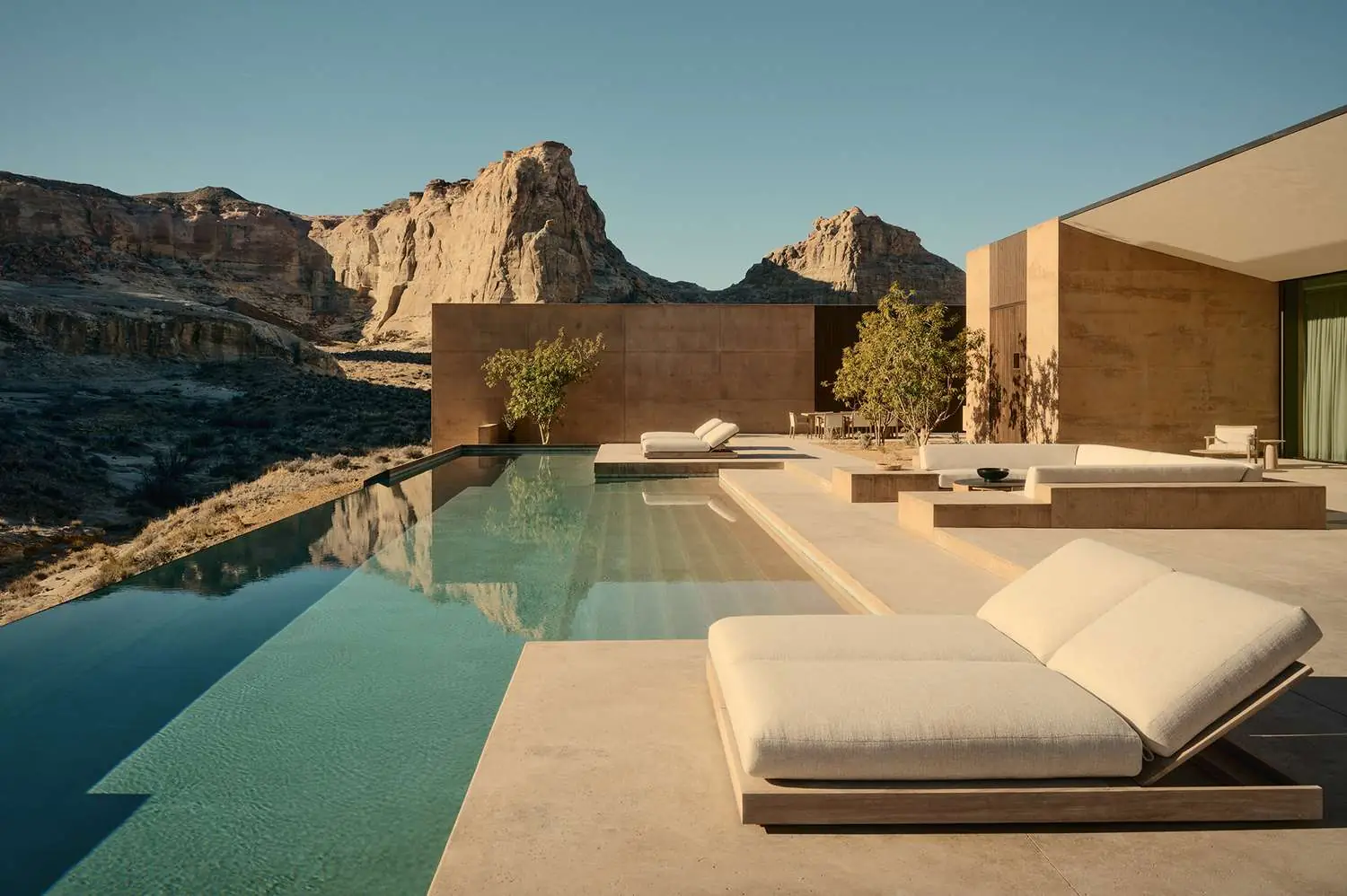
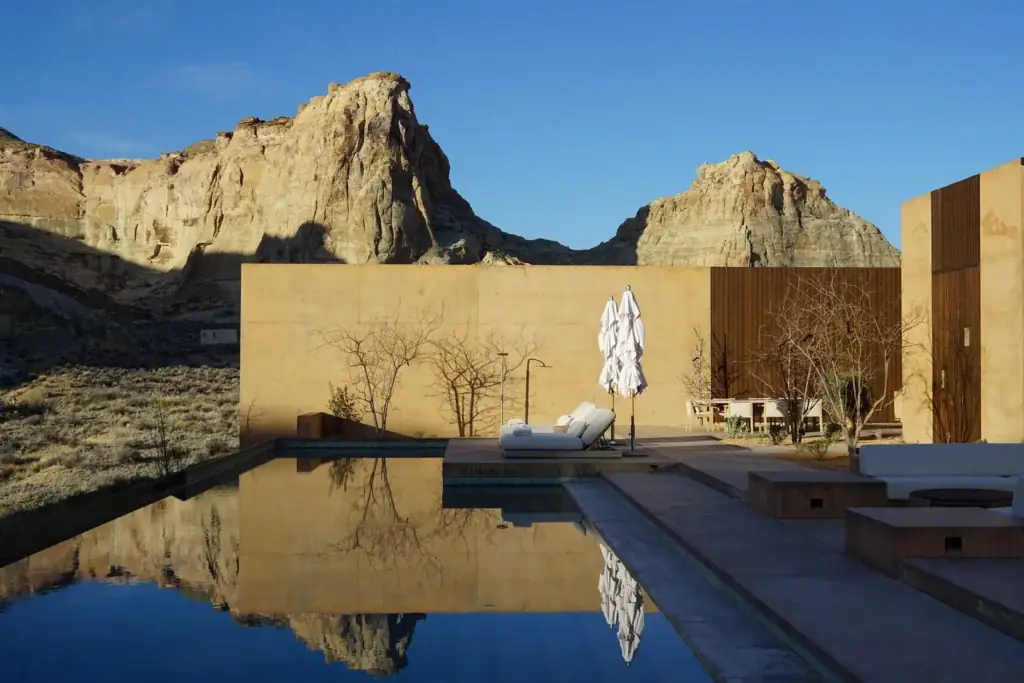
Contemporary desert luxury real estate combines the aesthetic openness of modern architecture with the thermal efficiency of historic building techniques. Modern luxury villas utilize rammed earth walls, low-emissivity insulated glass arrays, automated shade canopies, and off-grid solar storage.
Adopting integrated design frameworks bridges the gap between luxury and environmental efficiency. High-net-worth buyers now expect luxury desert villa destinations USA to offer both architectural elegance and long-term ecological sustainability.
Conceptual Frameworks and Mental Models
Framework 1: The Diurnal Thermal Envelope Model
The Diurnal Thermal Envelope model measures how effectively a villa design buffers interior living spaces against extreme outdoor temperature shifts.
Applying this model helps analysts evaluate structural cooling loads before purchasing an estate.
-
Daytime Peak Phase: Exterior surfaces absorb intense solar radiation. Heavy exterior thermal mass holds heat, preventing rapid interior warming.
-
Evening Drop Phase: Ambient temperatures fall rapidly post-sunset. The structural envelope begins releasing stored thermal energy outward into the dry atmosphere.
-
Night Base Phase: Internal spaces maintain comfortable baseline temperatures without demanding continuous mechanical HVAC operation.
Model Limits: High relative humidity spikes during seasonal monsoon months reduce radiative cooling efficiency, requiring mechanical dehumidification support.
Framework 2: The Three-Tier Water Security Model
This framework evaluates long-term water independence across three operational supply tiers:
-
Primary Municipal / Well Supply: High-volume deep-aquifer wells or secure municipal mainlines providing baseline domestic water.
-
Secondary Rainwater & Condensate Capture: Integrated cistern arrays capturing monsoon roof runoff and HVAC condensate for landscape irrigation.
-
Tertiary Greywater Recycling: On-site bio-filtration systems processing household shower and sink water to maintain outdoor vegetation buffers.
Model Limits: Deep aquifer wells face long-term depletion risks if regional agricultural or municipal drawdowns exceed natural recharge rates.
Framework 3: Topographical Microclimate Mapping
This framework analyzes how natural land contours alter localized environmental exposure across a desert site:
-
Alluvial Fan Placement: Elevating building structures above active wash channels eliminates direct flash flood threats.
-
Canyon Shadow Vectors: Positioning structures against northern mountain faces reduces direct afternoon solar radiation by up to thirty percent.
-
Thermal Inversion Floors: Avoiding low valley bottoms prevents trapping cold air pockets during winter freezing nights.
Model Limits: Microclimate buffers can be disrupted by large-scale neighboring earthwork developments or regional highway construction.
Key Categories of Desert Destinations and Architectural Trade-Offs
Geographic Typologies and Architectural Trade-Offs
Evaluating luxury desert villa destinations usa requires matching specific geographic regions with appropriate architectural styles. Each desert region presents unique climate dynamics, cultural histories, and construction trade-offs.
1. Coachella Valley (Greater Palm Springs, California)
This low-desert basin features iconic mid-century modern design, flat valley floors, and established golf resort communities. However, extreme summer heat pushes HVAC systems to their limits, and strict municipal short-term rental bans restrict leasing flexibility.
2. Sonoran High Desert (Paradise Valley & Scottsdale, Arizona)
Set among dramatic boulder outcrops and saguaro forests, this region offers expansive luxury compounds with private mountain views. On the downside, rapid suburban growth creates localized water management challenges and rising land costs.
3. Red Rock Plateau (Sedona & Moab, Utah/Arizona)
High-altitude red rock canyon environments provide extraordinary visual isolation and mild summer temperatures. Conversely, complex terrain limits building pad sizes and increases utility extension expenses.
4. High-Altitude Santa Fe & Taos Basin (New Mexico)
Renowned for authentic Pueblo Revival adobe architecture, rich cultural heritage, and high-altitude desert climates. However, cold winter freeze cycles require heavy heating capacity and seasonal pipe protection.
5. Mojave High Desert (Joshua Tree & Yucca Valley, California)
This region attracts custom off-grid architectural designs, artistic boulder compounds, and dark-sky enthusiasts. Yet infrastructure remains limited, requiring private well installations and off-grid solar arrays.
6. Great Basin High Desert (Sun Valley & Lake Tahoe Periphery, Nevada/Idaho)
Combining arid mountain desert landscapes with proximity to world-class alpine skiing and clear lake waters. Nevertheless, extreme seasonal snow loads require heavy structural roof framing and advanced snow-melt systems.
Strategic Geographic Selection Logic
Selecting the proper desert region depends on balancing lifestyle goals against operational complexity. Buyers seeking resort-style amenities and established country clubs should prioritize Paradise Valley or the Coachella Valley over isolated rural outposts.
Conversely, buyers prioritizing off-grid self-sufficiency, architectural experimentation, and absolute night-sky darkness should select the Mojave High Desert or the Colorado Plateau, provided that private utility infrastructure is thoroughly audited during procurement.
Detailed Real-World Scenarios and Risk Analysis
Scenario 1: Glazing Overload in a Low-Desert Contemporary Compound
Context & Constraints
A buyer acquires a newly constructed $12-million modern villa in Paradise Valley featuring forty-foot unshaded floor-to-ceiling glass walls facing south-west.
Decision Points
-
Option A: Retrofit exterior automated louvers and high-performance ceramic window films to block incoming solar radiation.
-
Option B: Replace primary glazing arrays with double-insulated low-emissivity glass assemblies, maintaining original architectural lines.
Failure Modes
Relying solely on internal mechanical cooling without exterior solar shading caused annual electrical utility costs to top $60,000, while severe internal glare rendered main living spaces unusable during afternoon hours.
Second-Order Effects
Excessive heat loads caused premature failure of twin 10-ton HVAC compressors midway through a summer heatwave, resulting in interior thermal damage to high-end artwork and custom wood millwork.
Scenario 2: Flash Flood Wash Migration Across an Alluvial Fan Property
Context & Constraints
An investor purchases an expansive custom compound in the foothills of Tucson, Arizona. The residence sits adjacent to an unpaved natural desert wash.
Decision Points
-
Option A: Construct heavy stone-armored gabion retaining walls to redirect seasonal storm runoff away from primary building foundations.
-
Option B: Re-grade site contours to create a secondary bypass channel while installing subterranean storm culverts.
Failure Modes
Ignoring seasonal monsoon drainage patterns allowed a 50-year storm event to breach the unreinforced wash banks, depositing two feet of mud and debris across lower terrace living spaces.
Second-Order Effects
The flooding incident led to prolonged insurance litigation over unmapped flood plain boundaries, reducing the property’s market valuation by twenty percent.
Scenario 3: Private Well Failure in a High-Altitude Desert Compound
Context & Constraints
A corporate executive leases a secluded off-grid compound near Joshua Tree, California, relying on a single 400-foot private groundwater well.
Decision Points
-
Option A: Deepen the existing well bore to 800 feet and install a modern high-capacity submersible pump array.
-
Option B: Construct a 10,000-gallon covered water storage facility supported by routine commercial water delivery contracts.
Failure Modes
Failing to monitor static water table depths resulted in the main well pump running dry during peak summer occupancy, burning out the pump motor and cutting off water completely.
Second-Order Effects
The property manager incurred high emergency water-hauling fees and had to cancel high-value seasonal rental bookings while waiting for well drilling crews to arrive.
Planning, Cost, and Resource Dynamics
Direct, Indirect, and Environmental Costs
Operating a luxury estate within an arid environment involves costs far beyond basic real estate purchase prices. Buyers must account for specialized structural maintenance, high energy demands, and complex water infrastructure upkeep.
Failing to budget for continuous UV exterior treatments and specialized HVAC maintenance leads to rapid structural deterioration.
Financial Reserve Models
Establishing accurate reserve funds protects desert property owners against sudden environmental damage and equipment failures.
A practical operational standard for luxury desert compounds requires setting aside 2% to 4% of total property replacement value annually into a dedicated maintenance reserve. This fund absorbs major solar system upgrades, well repairs, and exterior facade restorations without straining cash flow.
Tools, Strategies, and Support Systems
Key Environmental Inspection Protocols
Deploying advanced diagnostic technology and environmental auditing tools eliminates guesswork when evaluating desert properties.
1. Infrared Thermal Imaging Scans
Utilizing thermal cameras to identify hidden thermal bridges, failing window seals, and insulation gaps across exterior building envelopes during peak summer heat.
2. Hydrological Flow and Wash Mapping
Engaging civil engineers to model 100-year storm runoff vectors across site boundaries before planning building expansions or landscaping.
3. Off-Grid Solar & Storage Simulation
Applying software modeling to verify that solar photovoltaic arrays and battery banks can support peak summer HVAC loads during utility outages.
4. Subterranean Aquifer Static Depth Audits
Conducting hydro-geological tests on private wells to measure static water table levels, recovery rates, and mineral content before closing escrow.
5. Dark-Sky Lighting Compliance Assessments
Evaluating exterior lighting fixtures to ensure compliance with regional dark-sky ordinances, protecting night-sky visibility.
6. Xeriscaping & Fire-Defensible Buffer Planning
Designing low-water native landscaping zones that create fire-defensible spaces around main structures without demanding heavy irrigation.
Risk Landscape and Failure Modes
Taxonomy of Desert Real Estate Failures
Understanding environmental vulnerability patterns enables buyers to build robust protections into property selection protocols.
Compounding Environmental Hazards
Environmental threats in desert regions rarely happen in isolation. A summer heatwave combined with a power grid failure can quickly render an uninsulated luxury villa uninhabitable within hours.
Similarly, ignoring native landscape management can allow invasive brush growth to accumulate near building boundaries. This brush creates serious wildfire risks during dry spring windstorms.
Governance, Maintenance, and Long-Term Adaptation
Review and Management Cycles
A structured inspection schedule ensures property managers catch micro-defects before environmental exposure causes major structural failures.
Measurement, Tracking, and Evaluation
Leading vs. Lagging Performance Indicators
Effective desert real estate governance tracks both leading and lagging indicators to evaluate property health and energy efficiency.
-
Leading Indicators: Daily solar panel dust accumulation, static well water depth trends, HVAC compressor operating temperatures, and thermal scan delta readings.
-
Lagging Indicators: Monthly grid electricity bills, annual water hauling expenses, structural plaster repair costs, and emergency HVAC callout fees.
Tracking leading indicators allows property managers to resolve equipment degradation before environmental exposure causes total system breakdowns.
Quantitative Documentation Examples
Maintaining organized environmental and maintenance logs provides critical evidence during real estate appraisals or property sales.
Common Misconceptions and Oversimplifications
Myth 1: Low-Humidity Environments Prevent Building Deterioration
Correction: While low humidity limits timber decay and mold growth, high solar radiation and extreme daily thermal expansion cause rapid cracking of exterior stucco, sealant failure, and paint degradation.
Myth 2: Swimming Pools Are Easy to Maintain in Arid Climates
Correction: High summer temperatures and dry winds cause rapid pool water evaporation, requiring continuous water top-offs. Uncovered pools lose up to 6 feet of water depth annually to evaporation alone.
Myth 3: Solar Panels Require No Maintenance in Sunny Deserts
Correction: Fine desert dust and wind-borne sand settle on solar panels quickly, creating a insulating layer that can drop power generation efficiency by 15% to 30% unless panels are cleaned regularly.
Myth 4: Off-Grid Estates Eliminate All Utility Reliability Risks
Correction: Off-grid solar and battery systems require precise energy management. Extended overcast monsoon weather or battery management failures can leave properties without power if back-up generators fail.
Myth 5: Any Desert Land Parcel Can Support a Luxury Residence
Correction: Municipal water rights, protected saguaro flora laws, steep slope building limits, and unmapped flash flood plains restrict residential development across vast portions of the American West.
Ethical and Practical Considerations
Sustainable Desert Stewardship
Managing luxury real estate within fragile desert environments requires balancing personal luxury with ecological responsibility. Excessive groundwater extraction, heavy landscape irrigation, and unshielded light pollution degrade local ecosystems and strain regional resources.
Adopting sustainable architectural practices—such as native xeriscaping, dark-sky outdoor lighting, and high-efficiency water recycling—preserves delicate desert environments. Responsible estate management ensures these extraordinary landscapes remain vibrant for future generations.
Final Synthesis
Navigating luxury desert villa destinations USA successfully requires replacing superficial aesthetic judgments with rigorous environmental research. By understanding building envelope dynamics, auditing water security, and choosing appropriate regional architectural styles, real estate buyers systematically eliminate operational vulnerabilities.
A well-planned desert estate delivers extraordinary architectural beauty, spatial privacy, and long-term asset security. Treating high-end desert properties as specialized environmental assets ensures sustainable comfort, operational efficiency, and lasting peace of mind.