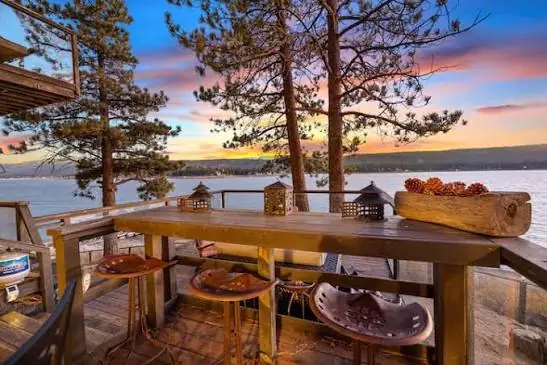
Luxury Lakefront Villa Stays USA: Architectural & Market Guide
Freshwater environments offer a distinct architectural canvas within the American high-end real estate market. From glacial lakes in the Pacific Northwest to spring-fed alpine bodies in the Sierra Nevada and expansive natural basins across the upper Midwest, lakefront environments attract significant capital investment. Properties constructed along these shorelines operate as complex micro-ecosystems. They combine specialized waterfront engineering with private residential access to pristine aquatic habitats.
However, developing, leasing, and managing high-end lakefront properties presents intricate operational demands. Unlike oceanfront properties governed primarily by tidal dynamics and saltwater corrosion, lakefront estates interact with variable water levels, seasonal freeze-thaw cycles, complex littoral rights, and strict watershed conservation laws. A villa built along a regulated reservoir operates under entirely different legal and environmental constraints than one set beside a natural alpine basin.
Evaluating high-end lakefront properties requires going beyond visual appreciation of water views. Estate managers, corporate travel curators, and private buyers must analyze subterranean soil saturation levels, dock structural integrity, littoral boundaries, and regional environmental regulations. Understanding these factors enables investors to identify high-performance estates while avoiding properties with hidden structural, legal, or operational vulnerabilities.
This flagship reference details the geographical regions, architectural systems, environmental risk models, and asset management frameworks required to evaluate high-end lakefront properties. By adopting these analytical protocols, portfolio managers and individual buyers can navigate the American freshwater real estate landscape with complete confidence.
Understanding “luxury lakefront villa stays usa”
Multi-Perspective Explanation
Evaluating luxury lakefront villa stays usa requires analyzing properties through three distinct lenses: environmental engineering, littoral legal rights, and operational asset preservation.
From an environmental engineering perspective, a premier lakefront villa must handle continuous shoreline moisture, water level shifts, and seasonal ice forces without structural degradation. From a littoral legal rights perspective, high-end properties require clear dock permits, unencumbered water access, and protected viewshed buffers across the water body. From an operational asset preservation perspective, property systems must regulate interior humidity, resist organic decay, and maintain private marine infrastructure year-round.
Regional Misinterpretations
Many buyers assume that all freshwater bodies present identical environmental and legal conditions. Investors frequently treat high-altitude alpine lake estates the same as low-elevation reservoir properties. In reality, a villa along Lake Tahoe operates under vastly different climatic and environmental rules than a property on Lake Keowee or Lake of the Ozarks.
Another widespread misunderstanding is equating high nightly lease rates with complete private access to the water’s edge. High-end finishes and private docks often mask complex public access easements, municipal setback rules, or shared submerged land leases that limit private usage rights.
Risks of Oversimplification
Oversimplifying lakefront property evaluation leads directly to severe operational and financial failures. Assessing estates based solely on interior aesthetics leaves buyers vulnerable to structural and legal issues.
-
Ignoring water-level fluctuations: Failing to verify seasonal dam release patterns can leave private docks stranded in shallow mud for months.
-
Overlooking littoral boundary limits: Purchasing or leasing property without auditing submerged land rights risks immediate legal disputes with neighboring owners.
-
Failing to audit ice-expansion dynamics: Building unreinforced dock structures in northern freeze zones results in severe winter structural damage.
Deep Contextual Background: The Evolution of Lakefront Living
Historical Systemic Evolution
Historically, North American lakefront properties served as seasonal summer camps or simple timber retreats. Early structures featured uninsulated wooden frames, basic pier foundations, and simple surface water intakes. These traditional cabins prioritized proximity to the water over environmental efficiency, operating primarily during warm summer months before closing down for winter.
The expansion of wealth and regional utility infrastructure transformed these seasonal retreats into year-round residential assets. Mid-century engineering introduced reinforced concrete seawalls, deep-set pilings, sophisticated septic systems, and winterized HVAC networks. Architects began designing expansive glass pavilions that provided wide views of the water while protecting living spaces from harsh lakefront winds.
Modern Sustainable Integration
Contemporary high-end lakefront architecture balances visual open access with rigorous environmental conservation. Modern villas utilize geothermal heating loops submerged in lake basins, high-performance glass arrays, low-impact dock footings, and advanced bio-filtration systems for runoff water.
Adopting integrated design frameworks bridges the gap between luxury living and watershed stewardship. High-net-worth buyers now expect luxury lakefront villa stays usa to deliver both architectural elegance and long-term ecological sustainability.
Conceptual Frameworks and Mental Models
Framework 1: The Littoral Buffer Zone Model
The Littoral Buffer Zone model evaluates environmental and legal privacy across three distinct zones extending outward from the main residence.
Applying this model helps analysts evaluate long-term visual and legal security before making property commitments.
-
Upland Structure Zone (0 to 30 Meters): Primary residential footprint, elevated above maximum flood lines, featuring structural moisture barriers and drainage channels.
-
Shoreline Fringe Zone (30 to 100 Meters): Natural vegetation buffers, bio-engineered retaining walls, and access paths designed to filter runoff water and prevent soil erosion.
-
Submerged Littoral Zone (100+ Meters): Private dock footprint, boat moorings, and water column access governed by state and federal submerged land permits.
Model Limits: Public trust doctrines and navigable water laws can grant the public access rights to shoreline areas below high-water marks, overriding private land claims.
Framework 2: The Freeze-Thaw Structural Resilience Matrix
This framework evaluates building material performance across four primary northern lakefront stress factors:
-
Ice Push Expansion: Lateral pressure exerted by expanding lake ice against docks, pilings, and retaining walls during winter thaws.
-
Capillary Moisture Migration: Ground moisture drawn upward through concrete foundations due to saturated shoreline soil conditions.
-
Organic Decay Acceleration: Elevated ambient humidity promoting mold growth, wood rot, and structural fastener corrosion.
-
Thermal Inversion Winds: Strong downslope winds generated over open water bodies, increasing lateral wind loads on glass facades.
Model Limits: Microclimate factors, such as wind-driven wave action during sudden thaws, can exceed standard structural engineering calculations.
Framework 3: Hydrological Watershed Dynamics
This framework analyzes how regional water regulation systems impact property usability across three operational categories:
-
Natural Glacial Basins: Stable baseline water levels with minimal artificial control, providing consistent shoreline access year-round.
-
Hydroelectric Storage Reservoirs: Regulated water levels subject to multi-foot seasonal drawdowns for power generation or flood control.
-
River-Fed Flow Basins: Variable water levels prone to sudden velocity spikes and high sediment loads during heavy seasonal rainstorms.
Model Limits: Unpredictable drought conditions or regional water management decisions can cause unexpected drawdowns across natural and regulated basins alike.
Key Categories of Lakefront Destinations and Architectural Trade-Offs
Geographic Typologies and Architectural Trade-Offs
Evaluating luxury lakefront villa stays usa requires matching specific geographic regions with appropriate architectural and engineering responses. Every lakefront environment presents unique climate factors and maintenance demands.
1. Glacial Alpine Basins (Lake Tahoe, California/Nevada)
These high-altitude waters feature deep clarity, dramatic mountain backdrops, and stable water margins. However, strict environmental agency regulations limit building footprints, and heavy winter snow loads require reinforced roof framing.
2. Upper Midwest Glacial Clusters (Lake Minnetonka, Minnesota & Geneva, Wisconsin)
Known for historic estate architecture, expansive grassy lawns, and deep sailing waters. Conversely, severe winter freeze cycles demand heavy-duty floating or removable dock systems to prevent ice-push destruction.
3. Southeastern Regulated Reservoirs (Lake Keowee, South Carolina & Lake Oconee, Georgia)
Warm regional climates offer year-round boating access and lush pine forest surrounds. On the downside, utility-controlled water drawdowns can expose red clay shorelines and leave shallow docks unusable during dry summer months.
4. Pacific Northwest Forest Lakes (Lake Washington & Lake Coeur d’Alene, Idaho)
These sites provide dense pine forest settings, deep waters, and mild temperate climates. Yet continuous winter rain, high ambient humidity, and organic rot require constant exterior maintenance and specialized drainage systems.
5. Northeastern Glacial Basins (Lake Winnipesaukee, New Hampshire & Lake Placid, New York)
Historic mountain lakes featuring classic timber-and-stone architecture, private island compounds, and vibrant autumn views. However, short summer usage windows, heavy winter snow, and historic preservation rules increase operational costs.
6. Ozark Plateau Reservoirs (Lake of the Ozarks, Missouri & Table Rock Lake, Arkansas)
Intricate serpentine shorelines offer expansive water access, private cove settings, and flexible rental rules. Nevertheless, high boat traffic causes continuous wave erosion, demanding heavy-duty dock anchoring systems.
Strategic Geographic Selection Logic
Selecting the proper lakefront region depends on balancing operational goals with environmental tolerance. Buyers seeking year-round outdoor living and flexible rental options should favor Southeastern reservoirs over northern alpine basins.
Conversely, buyers prioritizing water clarity, mountain scenery, and winter sports access should select Glacial Alpine Basins or Northeastern mountain lakes, provided that winterization budgets and dock permit structures are verified in advance.
Detailed Real-World Scenarios and Risk Analysis
Scenario 1: Unanchored Dock Destruction During Lake Ice Expansion
Context & Constraints
A property manager oversees a modern $10-million estate on Lake Geneva, Wisconsin. The estate features a custom 80-foot fixed steel dock system built into the shoreline bedrock.
Decision Points
-
Option A: Replace the fixed steel structure with a modern removable aluminum dock system stored onshore during winter months.
-
Option B: Install subterranean bubbler and de-icing circulation systems around fixed pilings to prevent ice formation.
Failure Modes
Failing to activate the de-icing system during a severe sudden freeze allowed expanding surface ice to shear off two primary steel pilings, destroying the dock deck.
Second-Order Effects
The destroyed dock created navigational hazards in the private cove, prompting municipal fines and delaying the summer rental season while waiting for permit approvals.
Scenario 2: Reservoir Drawdown Stranding Deep-Draft Marine Equipment
Context & Constraints
An executive family leases a luxury villa along a regulated reservoir in North Carolina for a three-week summer vacation, bringing a 30-foot deep-draft boat.
Decision Points
-
Option A: Relocate marine equipment to a commercial deep-water marina located 15 miles away along the primary dam headworks.
-
Option B: Negotiate an emergency contract to extend the private dock slip into deeper water using modular floating piers.
Failure Modes
Relying on historic seasonal water depth averages without checking active utility drawdowns left the boat grounded in shallow shoreline mud midway through the stay.
Second-Order Effects
The boat hull suffered structural gel-coat damage, and the family lost direct water access from the property, prompting formal financial dispute proceedings.
Scenario 3: Mold Contamination Infiltration Behind Unvented Cedar Facades
Context & Constraints
A luxury villa situated along the damp forested shore of Lake Washington in Seattle features high-end clear-cedar exterior cladding installed directly against plywood sheathing.
Decision Points
-
Option A: Remove exterior cedar cladding to install a continuous rain-screen air-gap ventilation matrix behind all exterior timber.
-
Option B: Apply heavy chemical water-sealant coatings to the exterior wood surfaces annually.
Failure Modes
Relying solely on topical chemical sealants failed to stop internal moisture accumulation. Trapped water created extensive hidden toxic mold colonies behind wall assemblies.
Second-Order Effects
Remediating the mold required stripping major exterior walls during peak summer season, making the villa uninhabitable for four months and causing significant rental revenue losses.
Planning, Cost, and Resource Dynamics
Direct, Indirect, and Environmental Costs
Operating a luxury lakefront property involves expenses that extend far beyond baseline mortgage or lease payments. Buyers must account for marine engineering maintenance, specialized water treatment systems, and strict environmental compliance reviews.
Failing to budget for continuous dock maintenance and shoreline stabilization leads to rapid structural decay and regulatory penalties.
Financial Reserve Models
Establishing accurate reserve funds protects lakefront property owners against sudden shoreline erosion, environmental fines, and dock failures.
A practical operational standard for luxury lakefront estates requires setting aside 3% to 5% of total property replacement value annually into a dedicated maintenance reserve. This fund covers major seawall repairs, dock overhauls, and specialized environmental remediation without disrupting cash flow.
Tools, Strategies, and Support Systems
Key Environmental Inspection Protocols
Deploying advanced diagnostic tools and environmental auditing methods eliminates guesswork when evaluating lakefront estates.
1. Underwater Sonar and Scuba Foundation Audits
Hiring certified marine inspectors to evaluate submerged dock pilings, retaining wall footings, and anchor points for erosion or rot.
2. Subterranean Hydrological Soil Sounding
Conducting soil core tests near shoreline building envelopes to measure groundwater saturation, soil load capacity, and liquefaction risks.
3. Infrared Moisture and Mold Detection
Using thermal imaging cameras to locate hidden moisture behind interior walls, ceilings, and crawlspaces in high-humidity lake environments.
4. Submerged Land Permit Audits
Reviewing state and local land records to confirm that all docks, boat lifts, and seawalls have valid, unexpired littoral permits.
5. Bathymetric Depth Charting
Mapping water depth contours around private docks during low-water periods to verify safe marine clearance for deep-draft boats.
6. Continuous Water-Quality Testing Arrays
Installing automated sensors to monitor pH levels, bacteria counts, and clarity in private swimming and domestic intake zones.
Risk Landscape and Failure Modes
Taxonomy of Lakefront Real Estate Failures
Understanding environmental vulnerability patterns enables buyers to build robust protections into property selection protocols.
Compounding Environmental Hazards
Environmental threats along lakefronts rarely happen in isolation. High wind events combined with sudden winter thaws can drive large ice sheets directly onto shoreline structures, causing widespread damage.
Similarly, ignoring native shoreline vegetation management allows wave action to erode exposed soil quickly. This condition destabilizes retaining walls and building foundations over time.
Governance, Maintenance, and Long-Term Adaptation
Review and Management Cycles
A structured inspection schedule ensures property managers catch micro-defects before environmental exposure causes major structural damage.
Measurement, Tracking, and Evaluation
Leading vs. Lagging Performance Indicators
Effective lakefront estate management tracks both leading and lagging indicators to evaluate structural integrity and environmental compliance.
-
Leading Indicators: Submerged piling wear rates, static water depth measurements, thermal imaging moisture readings, and water clarity metrics.
-
Lagging Indicators: Annual dock repair costs, seawall restoration expenses, mold remediation bills, and property insurance claim totals.
Tracking leading indicators allows property managers to address structural issues before environmental exposure leads to major failures.
Quantitative Documentation Examples
Maintaining organized environmental and maintenance logs provides critical evidence during real estate appraisals or property sales.
Common Misconceptions and Oversimplifications
Myth 1: Freshwater Properties Suffer Less Structural Damage Than Oceanfront Estates
Correction: While freshwater avoids severe saltwater corrosion, winter ice expansion, capillary moisture migration, and seasonal water shifts cause comparable structural stress over time.
Myth 2: Owning Lakefront Property Includes Full Ownership of the Waterfront
Correction: State and federal laws govern most submerged lands. Private owners hold littoral access rights, but the public often retains rights to navigate and access waters below high-water marks.
Myth 3: Private Docks Can Be Expanded or Modified at Will
Correction: Modifying marine structures requires complex permits from regional environmental agencies, state land boards, and local building authorities to protect water quality and aquatic habitats.
Myth 4: Lake Water Intakes Provide Unlimited Free Domestic Water
Correction: Drawing water from lakes requires valid water rights and sophisticated filtration systems to remove algae, bacteria, and seasonal agricultural runoff safely.
Myth 5: Concrete Seawalls Provide Permanent Protection Against Shoreline Erosion
Correction: Concrete seawalls reflect wave energy downward, eroding the lakebed at the base of the wall. Without proper footings and stone rip-rap reinforcement, seawalls fail over multi-year periods.
Ethical and Practical Considerations
Sustainable Watershed Stewardship
Managing luxury lakefront real estate requires balancing personal enjoyment with ecological responsibility. Excessive shoreline clearing, fertilizer runoff, and improper wastewater disposal cause algae blooms and damage aquatic ecosystems.
Adopting sustainable shoreline design—such as bio-engineered native vegetation buffers, low-impact dock footings, and eco-friendly water treatment systems—protects regional water quality. Responsible property management ensures these freshwater environments remain clean and vibrant for future generations.
Final Synthesis
Navigating luxury lakefront villa stays usa successfully requires replacing surface-level aesthetic choices with rigorous environmental and legal research. By understanding building envelope performance, auditing littoral rights, and choosing appropriate regional architectural strategies, buyers systematically eliminate operational vulnerabilities.
A well-planned lakefront estate delivers extraordinary natural beauty, private water access, and long-term asset security. Treating high-exposure freshwater properties as specialized environmental assets ensures sustainable comfort, operational efficiency, and lasting peace of mind.