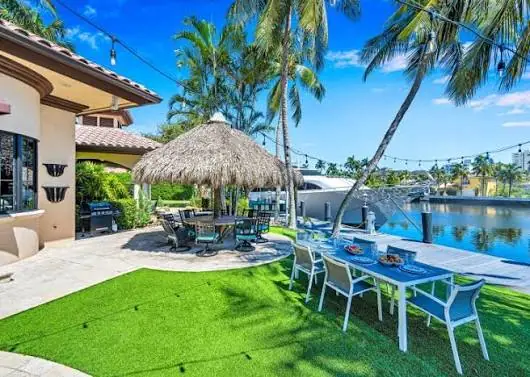
Best Beach Villa Rentals United States: Elite Coastal Blueprint
Securing premier oceanfront residential real estate across American coastal markets requires a sophisticated understanding of coastal geology, municipal zoning, structural maintenance, and localized hospitality management. Commercial luxury resorts operate under centralized, corporate brand frameworks that offer standardized amenities and automated operational redundancy. In contrast, private beach villas represent independent residential assets. Each property operates under distinct municipal regulations, environmental exposure risks, and localized management structures.
The American coastline spans vastly different geographic and climatic zones. An oceanfront estate perched along the Pacific bluffs of Southern California faces vastly different structural demands and legal constraints than a barrier-island compound along Florida’s Gulf Coast, a historic Shingle Style retreat in New England, or an isolated sanctuary in the Hawaiian Islands. Evaluating premier properties across these diverse regions requires analyzing structural setback laws, coastal erosion patterns, utility resilience, and regional property management standards.
Procuring high-value coastal inventory involves navigating a fragmented, multi-tiered distribution landscape. Reservation channels range from direct family-office portfolios to specialized regional brokerages, curated digital networks, and boutique luxury concierges. Each channel carries specific legal liability terms, payment security protocols, and operational service guarantees. A procurement strategy that functions seamlessly in an urban leisure market can fail completely when applied to a remote barrier island or coastal conservation zone.
This comprehensive reference manual provides an analytical framework for evaluating, procuring, and managing top-tier oceanfront residential properties across the United States. The following sections examine regional market categories, municipal regulatory frameworks, financial structures, and risk mitigation strategies. Approaching coastal real estate procurement with structured analytical discipline enables travelers, family offices, and corporate planners to secure properties that deliver privacy, architectural distinction, and operational reliability.
Understanding “best beach villa rentals united states”
Evaluating the best beach villa rentals united states demands looking far beyond interior staging, surface finishes, and wide-angle promotional photography. The term “best” is highly variable, shifting according to geographic microclimate, group demographic requirements, municipal zoning codes, and operational support systems. A dramatic bluff-top architectural home in Big Sur may offer privacy for a corporate retreat, yet present mobility hazards and safety challenges for a multi-generational family traveling with young children.
Multi-Perspective Analysis
Distinct stakeholders evaluate private oceanfront real estate through varied operational lenses:
-
The Family Office Manager: Prioritizes legal liability caps, high-value asset security, strict non-disclosure protections, and transparent escrow accounting.
-
The Logistics and Event Planner: Focuses on commercial-grade kitchen infrastructure, acoustic isolation, floor plan circulation capacity, and vendor access.
-
The Regulatory Compliance Auditor: Verifies municipal short-term rental permits, coastal zone management permits, transient occupancy tax standing, and neighborhood covenants.
-
The On-Site Operations Lead: Inspects utility grid stability, backup power generation, local emergency medical response times, and salt-air HVAC resilience.
Oversimplification Hazards
A major vulnerability in private rental procurement is treating independent coastal homes like standardized hotel suites. Open-market search algorithms frequently rank properties based on user engagement metrics or platform commission markups rather than structural build quality or local management responsiveness. Relying exclusively on promotional imagery conceals operational defects, such as failing reverse-osmosis water systems, degraded deck pilings, or nearby municipal beach nourishment projects.
Furthermore, property descriptions frequently confuse self-service holiday homes with professionally managed coastal compounds. Properties marketed as luxury retreats may lack fundamental operational infrastructure, such as automated generator backups or commercial-grade HVAC filtration. Thorough property evaluation requires inspecting building architecture, local management capability, and municipal compliance as an integrated system.
Deep Contextual Background
Historical Evolution of American Coastal Estates
The tradition of elite American beach retreats traces its origins to the late 19th century, when prominent industrial families established summer compounds in enclaves like Newport, Rhode Island, the Hamptons, and Jekyll Island, Georgia. These historic properties functioned as self-sustaining estates, operated by full-time stewards, private culinary staff, and groundskeepers under direct family employment.
During the mid-20th century, post-war economic growth, expanded highway networks, and commercial aviation transformed regional coastal markets across Florida, Southern California, and Hawaii. Specialized regional real estate brokerages began managing seasonal residences for private owners seeking to offset property holding expenses. These local agencies maintained direct physical oversight over their portfolios, employing caretakers to handle salt-air maintenance, pool chemistry, and guest receptions.
Digital Expansion and Market Fragmentation
The growth of online listing platforms in the late 2000s altered access to domestic coastal inventory. Peer-to-peer digital distribution allowed homeowners to market properties directly to global travelers. This sudden expansion overwhelmed municipal regulatory frameworks, prompting coastal cities and counties nationwide to enact strict zoning restrictions, transient occupancy taxes, and licensing caps.
Today, the market operates across three primary distribution tiers: open digital platforms, professionally managed regional brokerages, and ultra-luxury private concierges. Each channel balances pricing, operational control, and legal risk differently. Navigating this landscape requires identifying properties that combine architectural distinction with verified municipal compliance.
Conceptual Frameworks and Mental Models
Professional travel coordinators rely on structured mental models to evaluate private coastal real estate. These analytical frameworks eliminate marketing bias to assess how a property will perform during an extended stay.
1. The Coastal Setback and Access Framework
This framework evaluates a property’s true relationship to the shoreline by analyzing dune elevations, public right-of-way access, and tidal movement patterns.
-
Application: Map physical walkways relative to high-tide lines and inspect private stair stability prior to booking execution.
-
Limitation: Satellite mapping software cannot measure real-time beach erosion caused by recent winter storms.
2. The Operational Load Balance
This model calculates the daily domestic effort required to maintain property operations during an extended stay. It categorizes routine responsibilities, including meal preparation, housekeeping, pool maintenance, and utility oversight.
-
Application: Determine whether a stay requires self-catering, periodic domestic support, or full professional staff management (chef, butler, housekeeper).
-
Limitation: Introducing on-site domestic staff creates human variables, requiring guests to manage service schedules and personal privacy boundaries.
3. Utility and Environmental Resilience Scale
This scale evaluates a property’s technical resilience against regional coastal infrastructure failures, such as main grid blackout events, municipal water pressure drops, or salt-air HVAC corrosion.
-
Application: Verify the presence of backup diesel generators, secondary water cisterns, dual high-speed internet providers, and on-call service technicians.
-
Limitation: Properties with extensive backup infrastructure generally command higher baseline rental rates and require more complex mechanical management.
Key Categories and Variations
The domestic market for premier beach villa rentals spans several distinct geographic and architectural categories, each presenting specific operational characteristics.
1. Pacific Bluff Estates
Concentrated in enclaves like Malibu, Laguna Beach, Carmelo, and the Oregon Coast, these homes sit elevated above the water, offering sweeping ocean panoramas.
-
Best For: Privacy-focused travelers, small executive retreats, and corporate strategy sessions.
-
Trade-Offs: Reaching the water often requires descending long private staircases, and coastal marine fog can obscure afternoon views.
2. Atlantic Shingle-Style Compounds
Located across Cape Cod, Martha’s Vineyard, Nantucket, the Hamptons, and Coastal Maine, these historic estates feature cedar shingle siding, extensive grounds, and classic architectural detailing.
-
Best For: Multi-generational family reunions, summer traditions, and traditional social entertaining.
-
Trade-Offs: Older historic structures may feature outdated plumbing systems or lack central air conditioning across secondary guest suites.
3. Gulf Coast Barrier Island Residences
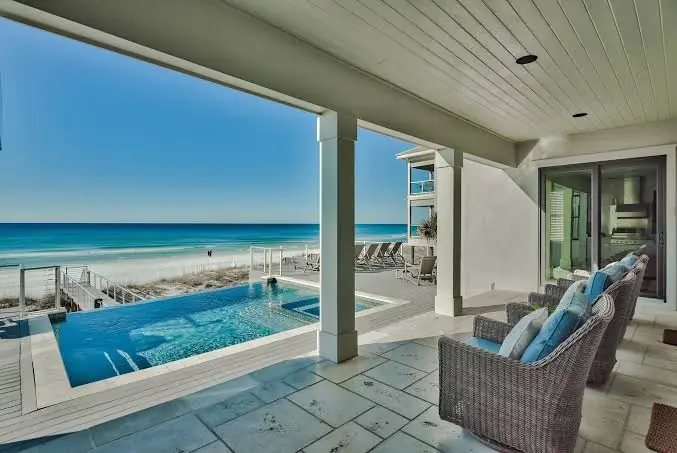
Spanning regions like Florida’s 30A, Naples, Sanibel Island, and Alabama’s Gulf Shores, these homes feature wide balconies, private pools, and immediate walk-out sand access.
-
Best For: Warm-water swimming, beach recreation, and multi-family resort-style stays.
-
Trade-Offs: High summer humidity places heavy operational loads on HVAC systems, and seasonal hurricane risks require strict evacuation clauses.
4. Hawaiian Island Sanctuary Estates
Situated on Kauai, Maui, Oahu, and the Big Island, these tropical estates feature open-air lanais, infinity-edge pools, and lush manicured grounds.
-
Best For: Year-round tropical travel, wellness retreats, and luxury multi-generational holidays.
-
Trade-Offs: Highly restrictive municipal short-term rental laws limit available inventory, resulting in premium baseline costs.
Realistic Decision Pathways
Selecting an appropriate property requires matching group demographics directly to estate capabilities:
Detailed Real-World Scenarios
Scenario A: The Barrier Island Storm Evacuation
A multi-generational family of sixteen books a luxury oceanfront compound along Florida’s 30A for a summer holiday.
-
Operational Challenge: A tropical storm develops rapidly in the Gulf of Mexico, prompting local officials to issue a mandatory coastal evacuation order.
-
Failure Mode: The unverified booking agency lacked a clear force-majeure clause and offered no alternative inland shelter arrangements.
-
Second-Order Effect: The family spent valuable travel days arranging emergency hotel lodging at inflated peak rates while disputing non-refundable lease payments.
-
Strategic Resolution: Require contractually verified storm-evacuation refund schedules and clear emergency concierge relocation protocols prior to lease execution.
Scenario B: Municipal Zoning Enforcement and Eviction
A corporate leadership team rents an unpermitted oceanfront villa in Southern California for a strategic retreat.
Zoning Violation
Local municipal code strictly limits short-term residential rentals to designated commercial zones.
Enforcement Action
Neighbors report excess vehicle street parking, prompting local code enforcement officers to serve an immediate cease-and-desist notice.
Evacuation Order
The corporate team faces immediate eviction and must relocate to a commercial business hotel on short notice during peak season.
Regulatory Prevention
Verify active municipal short-term rental permit numbers directly with county planning departments before transferring booking funds.
Planning, Cost, and Resource Dynamics
Procuring high-tier beach villas requires managing baseline rates, state sales taxes, county tourism levies, and operational service surcharges. Unlike interior properties, oceanfront real estate incurs significant salt-air corrosion maintenance and insurance overhead, which is reflected in total occupancy costs.
Direct vs. Indirect Expenses
-
Direct Costs: Base nightly rates, mandatory cleaning charges, state sales taxes, and security deposit holds.
-
Indirect Costs: Pool and spa heating surcharges, private beach setup fees, Advanced Provisioning Allowances (APA) for food supplies, and valet parking logistics.
-
Opportunity Costs: Strict seasonal cancellation policies tie up capital months ahead of travel, limiting financial flexibility if plans change.
Geographic Financial Comparison
Rental costs vary based on regional prestige, seasonal demand cycles, and local tax burdens:
Tools, Strategies, and Support Systems
Executing successful coastal property procurement requires utilizing municipal zoning databases, visual search utilities, and professional management networks.
Essential Audit Systems
-
Municipal Permit Verification Portals: Query city and county planning databases to confirm active short-term rental operating licenses and occupancy limits.
-
Reverse Image Search Engines: Upload property photographs into visual search utilities to verify that listings belong to legitimate managers rather than fraudulent clones.
-
Coastal Mapping Utilities: Review current satellite mapping layers to analyze beach width, dune vegetation stability, and neighbor proximity.
-
Technical Infrastructure Audits: Inspect ratings for backup power generators, HVAC capacity, water filtration systems, and pool heating controls.
-
Protected Payment Processing: Execute all booking deposits through secure escrow accounts or licensed merchant credit card processing rails.
-
Local Emergency Support Protocols: Confirm that property management maintains active 24/7 local maintenance teams with guaranteed response times for mechanical issues.
Risk Landscape and Failure Modes
Oceanfront property rentals involve operational risks distinct from interior residential stays. Identifying potential vulnerabilities enables bookers to implement safeguards.
Primary Vulnerability Classes
-
Regulatory Shutdowns: Unpermitted properties suffering sudden municipal enforcement actions or HOA shut-down orders prior to guest check-in.
-
Coastal Erosion Disruptions: Recent storm surges destroying beach access stairs or narrowing usable sand areas in front of the home.
-
Salt-Air Mechanical Failures: Corroded oceanfront air conditioning units or pool heating pumps breaking down during peak summer heat waves.
-
Contractual Ambiguities: Disagreements over pre-existing building wear versus tenant damage, often caused by poor check-in documentation.
Governance, Maintenance, and Long-Term Adaptation
Maintaining legal and operational standards across oceanfront estates requires active management by property agencies and vigilant verification by bookers.
Layered Verification Protocols
Pre-Arrival Stage
-
Verify active municipal short-term rental permit numbers with local government planning departments.
-
Confirm that all state sales taxes and local transient occupancy taxes are itemized in writing.
-
Review storm evacuation protocols and force-majeure refund policies with property management.
-
Secure written confirmation of check-in procedures, gate access codes, and emergency manager phone numbers.
Check-In Stage
-
Conduct a detailed physical walkthrough with the local property manager to document pre-existing wear.
-
Test water pressure, hot water delivery, pool heating, and HVAC cooling across all guest suites.
-
Inspect beach stairs, terrace railings, dune paths, and outdoor shower facilities.
-
Test Wi-Fi network connectivity and speeds in primary living areas and work spaces.
Post-Stay Stage
-
Complete a final joint walkthrough inspection with the local manager before departure.
-
Obtain a signed check-out document confirming overall property condition.
-
Track security deposit return timelines according to contractual agreements.
Measurement, Tracking, and Evaluation
Evaluating the success of a coastal property stay requires monitoring both pre-booking compliance indicators and post-stay operational metrics.
Core Performance Metrics
-
Permit Verification Speed: How rapidly local government offices confirm active short-term rental operating licenses.
-
Maintenance Resolution Velocity: The speed at which local property managers resolve minor mechanical or HVAC issues during a stay.
-
Deposit Return Speed: The total elapsed calendar days from property departure to the full return of security deposit funds.
-
Property Representation Accuracy: How closely the physical home matches online descriptions and promotional photography.
Common Misconceptions and Oversimplifications
Misconception 1: All Oceanfront Properties Have Direct Sand Walkout Access
Correction: Many coastal homes sit elevated on high bluffs or behind protected dune systems, requiring long staircases or public easement walks to reach the water. Bookers must verify physical walkway configurations before booking.
Misconception 2: High Nightly Rates Guarantee Hotel-Level Staffing
Correction: Premium nightly prices reflect land value, ocean view proximity, or architectural design, but do not guarantee domestic staffing. Private chefs, housekeepers, and concierges must be contractually arranged separately.
Misconception 3: Coastal Short-Term Rentals Are Uniformly Permitted
Correction: Many residential properties are listed on digital platforms despite operating in strict non-rental zoning districts. Travelers must independently audit municipal permit records to prevent forced eviction.
Ethical, Practical, and Contextual Considerations
The expansion of private oceanfront rentals carries significant social, economic, and environmental implications for coastal host communities.
Community and Environmental Balance
-
Dune and Habitat Preservation: Guests must respect delicate dune vegetation and observe local sea turtle lighting restrictions during nesting seasons.
-
Housing Availability: Unregulated short-term rentals can reduce long-term housing options for local hospitality workers in resort towns.
-
Fair Employment Standards: Responsible bookers should verify that management agencies pay fair living wages to local housekeepers, maintenance technicians, and groundskeepers.
Conclusion
Securing the best beach villa rentals united states requires combining rigorous municipal regulatory checks with detailed structural and financial evaluations. Understanding regional market categories, verifying local management support systems, and auditing coastal environmental factors allows travelers to secure oceanfront properties offering comfort, privacy, and legal security. Private coastal estates provide unmatched spatial freedom, architectural beauty, and regional authenticity. Achieving that ideal outcome simply demands methodical research, clear contract terms, and thorough pre-arrival planning.